If you’ve seen “WTV” in a text message, on TikTok, Snapchat, Instagram, or in a game chat, you might wonder what it means. In most cases, WTV simply means “whatever.” People use it as a quick way to express agreement, indifference, frustration, or to end a conversation.
If you’ve received “WTV” in a text message, Snapchat, TikTok comment, or online chat, you may still wonder how people actually use it in different situations. The WTV meaning in text is most commonly “whatever,” but its tone can change depending on the conversation. It may sound casual, playful, dismissive, or even slightly annoyed.
Because WTV is a popular texting abbreviation, its meaning is often misunderstood, especially by people who are unfamiliar with internet slang, social media acronyms, or chat abbreviations. The same three letters can carry different emotions based on the context, making it important to understand the sender’s intent.
In this guide, you’ll learn the WTV meaning in text, how it is used in text messages, social media, Snapchat, TikTok, Instagram, and online conversations, along with real-life examples, alternative meanings, and tips for using it correctly in everyday digital communication.
What Does WTV Mean?
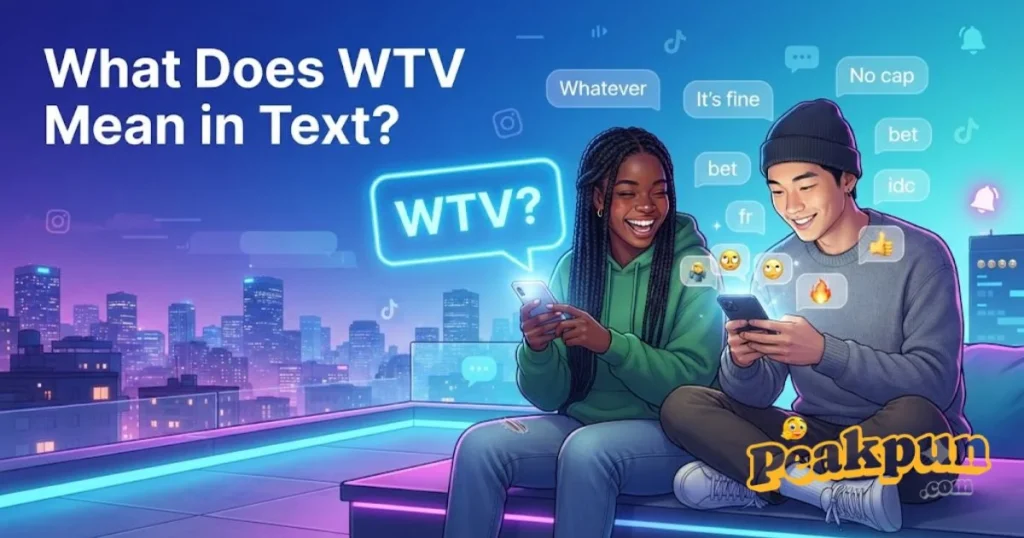
WTV means “whatever” in texting, online conversations, and social media platforms. It is a common internet slang abbreviation that people use when they want to shorten their messages and communicate quickly.
The WTV meaning in text can change depending on the situation and the person’s tone. In some conversations, it may show that someone does not mind a choice or agrees with something casually. For example, a person might say “WTV you want” to mean “Whatever you want.” However, it can also sound dismissive or frustrated when someone uses it during an argument or disagreement.
Read Our Funny Post: Hilarious Star Puns and Jokes That Shine Bright(2026)
What Does WTV Mean in Text?
WTV means “whatever” in text messages, online chats, and social media conversations. It is a popular texting abbreviation used to save time and make communication faster. People often use it when they want to show that they do not have a strong preference, do not want to continue a discussion, or simply want to respond casually.
The WTV meaning in text can depend on the tone and context of the conversation. In a friendly chat, it may sound relaxed and harmless, while in an argument, it can come across as dismissive or annoyed. Understanding the situation around the message helps you know what the sender really means.
You may see WTV used on platforms like Snapchat, TikTok, Instagram, Discord, WhatsApp, and gaming chats. Since online slang changes quickly, knowing how these abbreviations work can help you understand modern digital communication more easily.
The Basic Definition of WTV
The basic definition of WTV is “whatever.” It is a shortened version of the word that people use in informal digital conversations. Instead of typing the full word, users replace it with three simple letters to make their messages quicker.
For example:
- “WTV happens, I’m okay with it.”
Meaning: Whatever happens, I’m okay with it. - “Choose WTV you like.”
Meaning: Choose whatever you like.
In most cases, WTV is a casual expression that shows flexibility, lack of concern, or acceptance of a situation. However, the meaning can shift depending on the speaker’s emotions and the relationship between the people chatting.
What WTV Stands For
WTV stands for “Whatever.” It is created by taking the first letters and key sounds from the original word to form a shorter version commonly used in internet slang and online messaging.
Unlike formal abbreviations used in business or academic writing, WTV is mainly used in casual communication. It appears frequently in:
- Text messages
- Social media comments
- Private chats
- Gaming conversations
- Online communities
The abbreviation became popular because people wanted faster ways to communicate while typing on mobile devices. Similar examples include LOL (Laugh Out Loud), BRB (Be Right Back), and IDK (I Don’t Know).
Most Common Meaning in Text Messages

In text messages, the most common meaning of WTV is “whatever.” People usually use it in one of three ways:
| Usage | Meaning | Example |
| Casual acceptance | The person does not mind a choice | “WTV you want is fine.” |
| Ending a discussion | The person does not want to argue further | “Okay, WTV.” |
| Showing indifference | The person is not interested or concerned | “WTV, it doesn’t matter.” |
The tone behind WTV is important. A friend saying “WTV, let’s just go” may simply mean they are being flexible. However, someone replying “WTV” during a disagreement may sound like they are ignoring the issue.
How People Use WTV in Daily Chats
People use WTV in everyday conversations to keep messages short and informal. It is especially common among younger users who communicate through social media platforms, messaging apps, and online communities.
Common examples include:
Making a choice:
- “WTV restaurant you pick is fine.”
- Meaning: Any restaurant you choose is okay.
Showing that something does not matter:
- “WTV, I already finished it.”
- Meaning: It does not matter.
Ending a conversation:
- “If you don’t want to go, WTV.”
- Meaning: The speaker is giving up on convincing someone.
Casual agreement:
- “WTV works for me.”
- Meaning: Any option is acceptable.
Although WTV is a simple abbreviation, its meaning depends heavily on the conversation’s mood. Paying attention to the surrounding words, punctuation, and relationship with the sender can help you understand whether it sounds friendly, neutral, or negative.
Why Do People Use WTV?
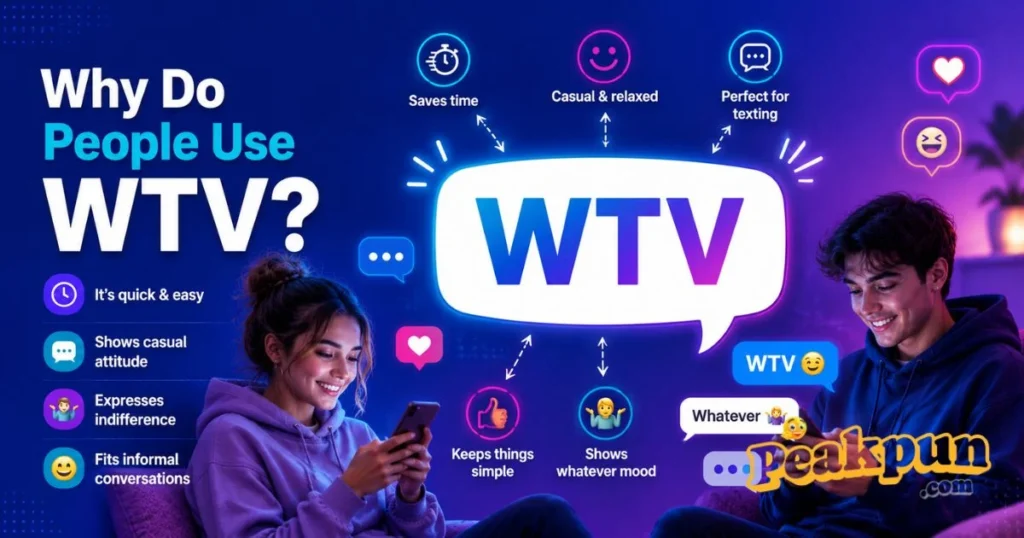
People use WTV (whatever) in text messages and online conversations because it is a quick and simple way to express their feelings without typing a long response. This texting abbreviation helps users communicate emotions like indifference, acceptance, flexibility, or a desire to move on from a topic.
The meaning of WTV in a conversation depends on the context, tone, and relationship between the people chatting. While it can sound casual and friendly, it may also appear dismissive if used during an argument or serious discussion.
To Show Indifference
One of the most common reasons people use WTV is to show indifference or a lack of strong feelings about a situation. It tells the other person that the choice, outcome, or topic is not very important to them.
For example:
- “WTV, I don’t really care where we go.”
Meaning: The person has no preference about the location. - “You can pick the movie, WTV.”
Meaning: Any movie choice is acceptable.
In this context, WTV means “it does not matter” or “I am okay with anything.” However, the tone can change if someone uses it in a negative or annoyed way.
Read More: Skibidi Toilet Puns and Jokes That Will Make You LOL(2026)
To End a Conversation
People also use WTV when they want to end a conversation quickly or avoid continuing an argument. It can show that someone does not want to explain further or debate the topic.
Examples:
- “Okay, WTV. Let’s just forget it.”
- “WTV, you’re right.”
Here, WTV may sound dismissive because the person is signaling that they no longer want to continue the discussion. The meaning is often connected to the emotions behind the message.
To Express Flexibility
Another reason people use WTV is to show that they are flexible and open to different choices. Instead of choosing one specific option, they let the other person decide.
Examples:
- “WTV time works for you.”
- “Order WTV you want from the menu.”
In these situations, WTV expresses agreement and openness. It means the person trusts the other person’s decision and does not have a specific preference.
To Save Time While Typing
People often use WTV to save time while texting. Since online conversations usually happen quickly, users create shorter forms of common words to make communication faster.
Instead of typing:
- “Whatever you want is fine with me.”
Someone may simply write:
- “WTV you want is fine.”
Like other internet slang terms such as LOL, IDK, BRB, and OMG, WTV helps users send shorter messages while keeping the meaning clear. It is especially common on Snapchat, TikTok, Instagram DMs, Discord, WhatsApp, and gaming chats, where fast communication is preferred.
Is WTV Always Negative?
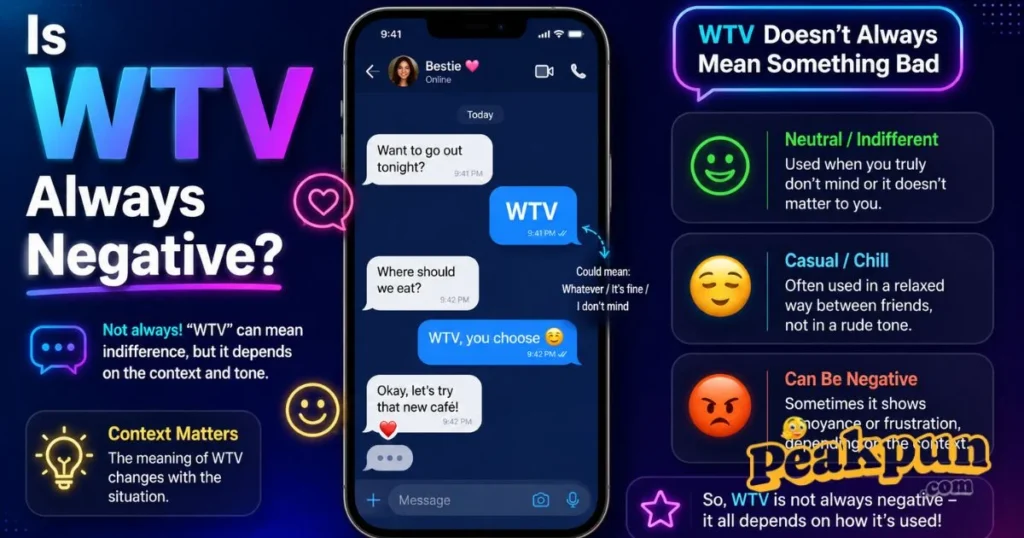
No, WTV is not always negative. Although some people interpret WTV (whatever) as rude, careless, or dismissive, its actual meaning depends on the context, tone, and relationship between the people having the conversation. In many situations, it is simply a casual way to show flexibility, acceptance, or a lack of preference.
For example, a friend saying “WTV you want to eat is fine” is usually a positive and relaxed response. However, replying only “WTV” during an argument may sound like the person does not care about the discussion.
Understanding how texting slang works can help prevent misunderstandings because written messages do not include facial expressions, voice tone, or body language.
When WTV Sounds Casual
In casual conversations, WTV can sound friendly, relaxed, and harmless. People often use it when they are comfortable with any option or do not have a strong opinion.
Examples:
- “WTV works for me.”
Meaning: Any option is okay. - “Pick WTV movie you like.”
Meaning: The other person can choose. - “WTV, we can decide later.”
Meaning: The decision is not urgent.
In these situations, WTV shows flexibility and openness rather than negativity. Friends and people who know each other well often use it as a simple shortcut in everyday chats.
When WTV Sounds Dismissive
Although WTV is not automatically rude, it can sound dismissive when someone uses it to avoid a serious conversation or ignore another person’s feelings.
Examples:
- “I already told you, WTV.”
- “WTV, believe what you want.”
In these cases, WTV may suggest frustration, annoyance, or a lack of interest. The short response can make the other person feel like their opinion or concern is being ignored.
The same abbreviation can have different meanings depending on the situation. A single-word reply like “WTV” may feel colder than a longer sentence such as “WTV you prefer is okay with me.”
How Tone Changes the Meaning
The meaning of WTV in text messages is strongly affected by the sender’s tone. Since online communication does not include voice or facial expressions, readers often rely on surrounding words and the overall conversation.
Here are some examples:
| Message | Possible Meaning |
| “WTV you want 😊” | Friendly acceptance |
| “WTV, I don’t care.” | Indifference or frustration |
| “WTV works for me.” | Flexibility and agreement |
| “Fine, WTV.” | Possible annoyance or dismissal |
Small details like punctuation, emojis, and additional words can completely change how WTV feels in a conversation.
Understanding Context Before Judging
Before assuming that WTV is negative, it is important to look at the full conversation. The relationship between the sender and receiver, the topic being discussed, and the previous messages all affect the meaning.
For example, a close friend texting “WTV, see you later” may simply be using casual slang. But someone responding “WTV” after a disagreement may be showing frustration.
When interpreting internet slang and texting abbreviations, always consider the conversation context, emotional tone, and communication style of the person using it. This helps you understand whether WTV means acceptance, flexibility, or a dismissive attitude.
Examples of WTV in Real Conversations
Seeing WTV used in real conversations makes it easier to understand how its meaning changes depending on the situation. While WTV usually means “whatever,” the tone can range from friendly acceptance to frustration or disinterest.
Below are common examples of how people use WTV in text messages, social media chats, and online conversations.
Example 1
Person A: What should we watch tonight?
Person B: WTV you want, I’m okay with anything.
Meaning:
Here, WTV shows flexibility. Person B does not have a specific preference and is allowing the other person to choose.
Example 2
Person A: I think you should try a different option.
Person B: WTV, I’ll do what I want.
Meaning:
In this situation, WTV sounds dismissive. Person B may be showing frustration or indicating that they do not want to continue the discussion.
Example 3
Person A: Should we meet at 5 or 6?
Person B: WTV time works for me.
Meaning:
Here, WTV means “whatever time is fine.” It is a casual way to express agreement and show that both options are acceptable.
Example 4
Person A: Are you upset about what happened?
Person B: No, WTV. It’s not a big deal.
Meaning:
In this example, WTV can show indifference. The person may genuinely not care, or they may be trying to avoid discussing the topic further.
What These Examples Teach You
These examples show that the WTV meaning in text depends heavily on context and tone. The abbreviation itself is neutral, but the way someone uses it can change how it sounds.
- Friendly use: Shows acceptance or flexibility.
- Neutral use: Means the person has no preference.
- Negative use: Can suggest annoyance, frustration, or dismissal.
When you see WTV in a text message, Snapchat chat, TikTok comment, or Instagram DM, look at the surrounding conversation before deciding what the person means. The words before and after WTV, along with the relationship between the people chatting, usually reveal the true intention behind the message.
Must Read: Chainsaw Invented Puns and Jokes (2026) – Peakpun
What Does WTV Mean on Snapchat?
On Snapchat, WTV means “whatever” and is commonly used in chats, replies, and captions between friends. Since Snapchat conversations are usually quick and casual, users often rely on texting abbreviations like WTV to respond faster and keep messages short.
The meaning of WTV on Snapchat depends on the conversation. It can show that someone is okay with a choice, does not care about a situation, or wants to end a discussion. The tone of the message helps determine whether it sounds friendly, neutral, or dismissive.
How Friends Use WTV on Snapchat
Friends often use WTV in Snapchat chats when they are having casual conversations. It is usually a relaxed way to say “I’m fine with anything” or “it does not matter.”
Examples:
- “WTV you wanna do today?”
Meaning: Any plan is okay. - “Send WTV snap you want.”
Meaning: Any snap is fine.
Among close friends, WTV usually feels informal and natural because both people understand the tone behind the message.
WTV in Snaps and Chats
In Snapchat snaps and private chats, users may add WTV as a quick response to questions, opinions, or decisions. It helps keep conversations moving without writing a longer reply.
Common examples:
- “WTV, I’ll join later.”
- “WTV works for me.”
- “Do WTV makes you happy.”
However, a short reply like “WTV” by itself may sometimes feel cold, especially if the conversation involves a disagreement or serious topic.
Common Snapchat Situations
People commonly use WTV on Snapchat in situations such as:
- Choosing where to go with friends
- Responding to opinions
- Ending small disagreements
- Showing they do not have a preference
- Replying quickly during casual chats
Understanding the relationship between the people chatting is important because Snapchat slang often depends on personal communication style and tone.
What Does WTV Mean on TikTok?
On TikTok, WTV means “whatever” and appears frequently in comments, captions, and video discussions. TikTok users often use short slang terms to express reactions, opinions, or emotions quickly.
The WTV meaning on TikTok can range from a playful response to a dismissive reaction, depending on the video and the surrounding comments.
WTV in TikTok Comments
In TikTok comments, users may use WTV to react to videos, opinions, or debates. It can show agreement, disagreement, or a lack of interest.
Examples:
- “WTV, this song is still good.”
- “WTV people say, I like this trend.”
In some cases, commenters use WTV to show that they are not affected by criticism or negative opinions.
WTV in Video Captions
TikTok creators may include WTV in captions to create a casual or relatable tone. It can make content feel more conversational and connected to online slang culture.
Examples:
- “WTV happens, keep going.”
- “WTV mood today.”
Here, WTV often gives the caption a relaxed and informal style.
TikTok Slang Trends
TikTok has helped popularize many internet slang terms and abbreviations, including WTV. Short expressions like WTV, IDK, POV, FR, and LOL spread quickly because they fit the fast-paced style of social media communication.
Users often adopt these terms to make their posts, comments, and conversations feel more natural within online communities.
What Does WTV Mean on Instagram?
On Instagram, WTV means “whatever” and is mainly used in Instagram DMs, comments, and captions. Like other platforms, the meaning depends on the tone and context of the conversation.
Instagram users often use WTV when replying casually, reacting to posts, or expressing that they are not worried about something.
WTV in Instagram DMs
In Instagram direct messages (DMs), people use WTV as a quick response when chatting with friends or followers.
Examples:
- “WTV you choose is fine.”
- “WTV, let’s talk later.”
In friendly conversations, it usually shows flexibility. In serious conversations, it may appear dismissive.
WTV in Comments and Reels
Instagram users may add WTV in comments on Reels and posts to share a quick reaction or opinion.
Examples:
- “WTV, this outfit looks amazing.”
- “WTV haters say, keep posting.”
The abbreviation is often used to create a casual, confident, or humorous tone.
How Influencers Use WTV
Influencers and content creators may use WTV in captions or stories to sound more relatable and conversational. It helps them connect with audiences who are familiar with social media slang.
For example:
- “WTV happens, stay positive.”
- “WTV the trend is, I’m trying it.”
In influencer content, WTV is usually used as a casual expression rather than a serious statement.
What Does WTV Mean on WhatsApp?
On WhatsApp, WTV means “whatever” and is commonly used in personal chats and group conversations. Since WhatsApp is widely used for everyday communication, users often rely on abbreviations to make messages faster.
The meaning of WTV on WhatsApp can be friendly, neutral, or negative depending on the conversation.
WTV in Private Chats
In private WhatsApp conversations, people use WTV when talking with friends, family members, or close contacts.
Examples:
- “WTV you decide is okay.”
- “WTV, I’m not worried.”
It often means the person is open to different choices or does not want to spend time discussing a small decision.
WTV in Group Conversations
In WhatsApp groups, WTV is useful for quick replies when several people are making plans or sharing opinions.
Examples:
- “WTV works for everyone.”
- “WTV, just let me know the time.”
Group members often use it to show flexibility and keep conversations moving.
Formal vs Casual Use on WhatsApp
Although WTV is common in casual WhatsApp chats, it is not suitable for formal communication. You should avoid using it in professional messages, workplace conversations, or official discussions.
| Situation | Use of WTV |
| Friends and family chats | Common and acceptable |
| Group planning | Usually fine |
| Professional messages | Avoid |
| Formal emails | Not recommended |
Because WTV is an informal texting abbreviation, it works best in relaxed conversations where slang and short replies are expected.
Must Read: Funny Roller Skating Puns and Jokes for Every Skater (2026)
What Does WTV Mean on Discord and Gaming?

On Discord and gaming platforms, WTV means “whatever” and is commonly used during fast conversations between players. Gamers often use short internet slang terms to communicate quickly while focusing on gameplay.
The meaning of WTV in gaming chats depends on the situation. It may show that a player does not care about a choice, accepts a decision, or wants to move on from a discussion. However, during competitive conversations, it can sometimes sound dismissive.
WTV During Online Games
During online games, players may use WTV when discussing strategies, team choices, or game decisions. It is often a quick way to show that any option is acceptable.
Examples:
- “WTV character you pick is fine.”
Meaning: Any character choice works. - “WTV, let’s start the match.”
Meaning: The player wants to move forward.
In fast-paced games, short replies like WTV help players communicate quickly without interrupting gameplay.
WTV in Discord Servers
In Discord servers, users use WTV in text channels, voice chat discussions, and gaming communities. It is especially common among friends who already understand each other’s communication style.
Examples:
- “WTV server you join, I’ll follow.”
- “WTV happens, we can play again.”
Because Discord includes different communities, the meaning of WTV can vary. In a friendly server, it may sound casual, while in a debate or serious discussion, it may appear rude.
Team Chat vs Casual Chat Usage
The way WTV is understood in gaming often depends on the type of conversation.
| Chat Type | Meaning of WTV |
| Team strategy chat | Shows flexibility or acceptance |
| Friendly gaming chat | Casual response |
| Competitive argument | May sound dismissive |
| Public server discussion | Depends on tone and context |
In team-based games, using WTV with clear communication helps avoid confusion. A short message like “WTV, you decide” sounds more cooperative than simply sending “WTV.”
Can WTV Be Rude?
WTV is not automatically rude, but it can sometimes feel negative depending on how it is used. Since text messages do not show facial expressions or voice tone, a simple abbreviation can be misunderstood.
The meaning of WTV in text conversations depends on the words around it, the topic being discussed, and the relationship between the people chatting.
Situations Where It Feels Rude
WTV may sound rude or dismissive when someone uses it to ignore another person’s opinion or avoid a serious conversation.
Examples:
- “WTV, I don’t care.”
- “Okay, WTV.”
In these cases, the abbreviation may suggest frustration, annoyance, or a lack of interest.
It can also feel rude when someone replies with only “WTV” during an emotional conversation because the short response may appear like they are ending the discussion.
When It Is Completely Harmless
In many situations, WTV is completely harmless and simply means the person is flexible or relaxed about a decision.
Examples:
- “WTV restaurant you choose is okay.”
- “WTV time works for me.”
Here, WTV shows agreement, openness, and convenience rather than negativity.
Friends often use it naturally because both people understand that the message is casual.
Tips to Avoid Misunderstandings
To make sure WTV does not sound rude, consider adding extra words that explain your tone.
Instead of:
- “WTV.”
Try:
- “WTV works for me.”
- “WTV you prefer is fine.”
- “WTV, no worries.”
Adding context makes your message clearer and helps the other person understand your intention.
Is WTV Flirty?
WTV is not usually considered a flirty abbreviation. Most of the time, it simply means “whatever” and is used for casual conversations. However, the meaning can change depending on the relationship, tone, and other messages around it.
In some playful conversations, WTV may be used jokingly or teasingly, but the abbreviation itself does not show romantic interest.
WTV in Dating Conversations
In dating chats or romantic conversations, WTV can have different meanings depending on the situation.
Examples:
- “WTV you want, I’m happy.”
Meaning: The person is being flexible. - “WTV 🙄”
Meaning: The person may sound annoyed or uninterested.
When talking to someone you like, relying only on short replies like WTV may create confusion because the other person may not know your actual feelings.
Can WTV Show Interest?
By itself, WTV usually does not show romantic interest. It is a neutral phrase rather than a flirting signal.
Someone interested in you is more likely to use:
- Longer replies
- Questions about you
- Playful messages
- Compliments
- Continued conversation

However, if WTV appears alongside affectionate or playful messages, it may simply be part of a casual flirting style.
Flirty vs Uninterested Responses
The surrounding conversation helps determine whether WTV feels playful or uninterested.
| Message | Possible Meaning |
| “WTV you want, I just want to spend time with you.” | Caring and interested |
| “WTV 😂 you always choose.” | Playful teasing |
| “WTV.” | Could seem uninterested |
| “Fine, WTV.” | May show frustration |
Always consider the full conversation rather than judging the meaning of one abbreviation.
When Should You Use WTV?
You should use WTV in situations where casual language is expected. It works best in relaxed conversations with friends, classmates, teammates, or people who understand your communication style.
Because WTV is an informal texting abbreviation, it is not recommended for professional emails, workplace messages, or formal communication.
Best Situations to Use WTV
Good situations for using WTV include:
- Casual chats with friends
- Making simple decisions
- Group planning
- Gaming conversations
- Social media messages
Examples:
- “WTV works for everyone.”
- “Choose WTV you like.”
These uses show flexibility and keep conversations simple.
Casual Conversations Only
WTV is mainly designed for casual communication. It belongs to the world of internet slang, online messaging, and social media language rather than formal writing.
Avoid using WTV in:
- Business emails
- Job applications
- Professional conversations
- Official messages
Using the right communication style helps prevent confusion and keeps your message appropriate.
Using WTV With Friends
Using WTV with friends is usually natural because close friends understand each other’s tone and personality. It can make conversations faster and more relaxed.
Examples:
- “WTV, we’ll figure it out later.”
- “WTV you choose, I’m good.”
When used with the right audience, WTV is a simple and effective way to express “whatever” without making your messages longer.
Read More: Hilarious Duck Puns & Jokes That Will Quack You Up(2026)
When Should You Avoid WTV?
Although WTV (whatever) is common in casual conversations, there are situations where using it may create confusion or make your message sound careless. Since WTV is an informal texting abbreviation, it is best to use it only when the situation and relationship are appropriate.
Professional Conversations
You should avoid using WTV in professional conversations because it may appear unprofessional or too casual. Workplace communication usually requires clear and respectful language.
For example, avoid writing:
- “WTV works for the project.”
Instead, use:
- “Any option works for me.”
- “I am comfortable with either choice.”
Using complete words helps maintain a professional tone in emails, meetings, and workplace chats.
Talking to Teachers or Parents
When communicating with teachers, parents, or older adults, using WTV may cause misunderstandings. Not everyone is familiar with internet slang and texting abbreviations, so the message may sound disrespectful even if you do not mean it that way.
For example:
- “WTV, I’ll do it later.”
This may sound dismissive. A clearer response would be:
- “I understand. I’ll take care of it later.”
Choosing respectful language helps make your message easier to understand.
Serious or Emotional Discussions
Avoid using WTV during serious or emotional conversations because it can make the other person feel ignored or unimportant.
For example:
- “WTV, it’s your choice.”
During an emotional discussion, this may sound like you do not care about the situation.
Instead, try using:
- “I understand your point.”
- “Let’s talk about it.”
When conversations involve feelings, a thoughtful response is usually better than a short abbreviation.
How Do You Reply to WTV?
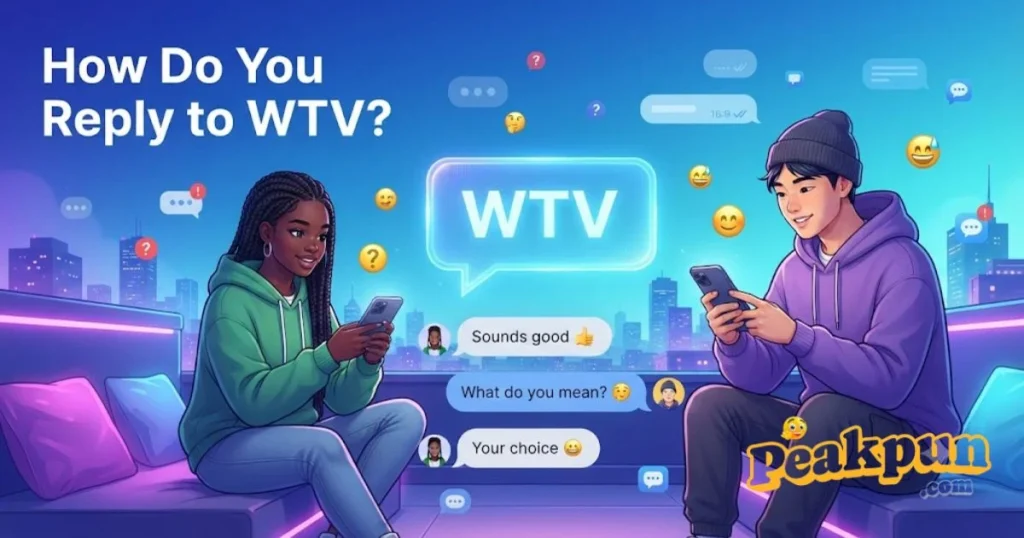
The best way to reply to WTV depends on the tone and situation. Since WTV can mean flexibility, indifference, or frustration, your response should match the context of the conversation.
Friendly Replies
If someone uses WTV casually, you can respond in a friendly way.
Examples:
- “Okay, let’s do that.”
- “Sounds good!”
- “Great, I’ll choose then.”
These replies work well when WTV means the person is open to any option.
Funny Replies
Among friends, you can answer WTV with playful responses.
Examples:
- “WTV? That’s the easiest decision ever.”
- “Classic WTV answer 😂”
- “Alright, mystery choice it is.”
Humorous replies can keep the conversation relaxed and enjoyable.
Calm Responses During Arguments
If someone says WTV during an argument, avoid immediately assuming they are being rude. A calm response can help continue the conversation.
Examples:
- “I feel like you don’t want to discuss this. Is everything okay?”
- “Let’s talk about what happened.”
- “I want to understand your point.”
A thoughtful response can prevent a small disagreement from becoming a bigger issue.
When to Ask for Clarification
Sometimes WTV is unclear, especially when the conversation involves emotions or important decisions. In these situations, asking for clarification is helpful.
Examples:
- “Do you mean you’re okay with anything?”
- “Are you saying you don’t care, or are you just being flexible?”
Understanding the sender’s intention can prevent unnecessary misunderstandings.
WTV vs Similar Internet Slang
Many internet slang terms and texting abbreviations have similar meanings, but they are not always interchangeable. Understanding the differences helps you choose the right expression.
WTV vs Whatever
WTV and whatever have the same basic meaning. WTV is simply a shorter version used in casual online communication.
Examples:
- WTV you want.
- Whatever you want.
The difference is mainly the writing style. WTV feels more informal and is common in texting, while “whatever” can be used in both casual and formal situations.
WTV vs IDC
IDC means “I don’t care.” While WTV can sometimes suggest a similar feeling, IDC is usually stronger and more direct.
Examples:
- “WTV works for me.”
Meaning: Any option is okay. - “IDC what happens.”
Meaning: The person has little or no interest.
IDC often sounds more negative because it clearly shows a lack of concern.
WTV vs IDK
IDK means “I don’t know.” It is used when someone does not have an answer or information.
Examples:
- “IDK where we should go.”
Meaning: I do not know. - “WTV place is fine.”
Meaning: Any place is okay.
WTV expresses flexibility, while IDK expresses uncertainty.
WTV vs I Don’t Care
WTV and “I don’t care” can overlap, but their tone is different.
- WTV: Can mean “anything is fine.”
- I don’t care: Often sounds stronger and may seem dismissive.
For example:
“WTV movie you choose is okay.” sounds flexible.
“I don’t care what movie we watch.” may sound uninterested.
Which One Should You Use?
Choose the expression based on your intended meaning:
| Phrase | Best Use |
| WTV | Casual flexibility or relaxed replies |
| Whatever | Casual or general conversations |
| IDC | Showing a strong lack of concern |
| IDK | When you do not know something |
| I don’t care | Directly expressing no interest |
For most friendly conversations, WTV is a softer and more casual choice than IDC or “I don’t care.”
Common Mistakes About WTV
People often misunderstand WTV meaning in text because they assume the abbreviation always has the same emotion. In reality, its meaning depends on the conversation and the person using it.
Assuming It Is Always Rude
One common mistake is thinking WTV is always negative. While it can sound dismissive in some situations, it is often just a casual way to show agreement or flexibility.
Example:
- “WTV you choose is fine.”
Here, the person is not being rude. They are simply allowing someone else to decide.
Confusing WTV With Other Acronyms
Another mistake is confusing WTV with other online abbreviations. Since many internet slang terms look similar, understanding the context is important.
Always check how the abbreviation is used before deciding what it means.
Using WTV in Formal Messages
Using WTV in formal communication is another common mistake. Slang abbreviations are designed for casual conversations, not professional writing.
Avoid using WTV in:
- Work emails
- School assignments
- Official messages
- Business communication
Ignoring the Conversation Context
The biggest mistake is ignoring the surrounding conversation. A single word like WTV cannot always show the person’s true intention.
Look at:
- Previous messages
- Relationship with the sender
- Topic being discussed
- Overall tone
Context usually reveals the real meaning.
Other Possible Meanings of WTV
Although WTV most commonly means “whatever” in texting, the abbreviation can have other meanings in different fields. The correct interpretation depends on where you see it.
WTV as Whatever
In everyday online communication, WTV almost always means “whatever.” This is the most common meaning on:
- Text messages
- Snapchat
- TikTok
- Discord
WTV as World TV
In some contexts, WTV may refer to “World TV” or television-related names. This meaning is less common and usually appears in media, broadcasting, or entertainment discussions.
WTV in Business and Organizations
Some companies, organizations, or projects may use WTV as an internal abbreviation or name. In these cases, the meaning depends on the specific organization or industry.
For example, a company may use WTV as a shortened name for a department, service, or product.
Rare Meanings of WTV
Other uncommon meanings of WTV may appear in specialized areas such as:
- Technology
- Media
- Organizations
- Industry-specific terms
These meanings are rare compared with the common texting meaning of “whatever.”
How to Identify the Correct Meaning from Context
To understand what WTV means, consider where you found it and how it was used.
Ask yourself:
- Was it in a text message or social media chat?
- Was the conversation casual or professional?
- Were people discussing entertainment, business, or technology?
- What words appeared before and after WTV?
In most everyday conversations, WTV means “whatever.” However, checking the context helps you identify the correct meaning and avoid confusion.
Conclusion
The WTV meaning in text is most commonly “whatever.” People use this popular texting abbreviation in casual conversations to show flexibility, indifference, acceptance, or to quickly end a discussion. However, the meaning of WTV is not always negative. Its tone depends on the situation, the relationship between the people chatting, and the words surrounding it.
You may see WTV used on Snapchat, TikTok, Instagram, WhatsApp, Discord, and gaming chats because it helps people communicate faster in informal conversations. While it can be a simple and harmless reply among friends, it may sound dismissive during serious conversations or disagreements.
Understanding context, tone, and communication style is the key to correctly interpreting WTV. Use it with people who understand casual slang, and avoid it in professional or formal situations where clear language is more appropriate.
FAQs About WTV Meaning in Text
What does WTV mean in texting?
WTV means “whatever” in texting. It is a common abbreviation used in casual chats to show that someone does not have a preference, accepts a choice, or does not want to continue a discussion.
Is WTV rude?
WTV is not always rude. It can be friendly and casual when someone means “anything is fine.” However, it may sound rude or dismissive if it is used alone during an argument or serious conversation.
What does WTV stand for?
WTV stands for “whatever.” It is a shortened form commonly used in online conversations, social media messages, and text chats.
What does WTV mean on Snapchat?
On Snapchat, WTV usually means “whatever.” Friends often use it in snaps and chats to show flexibility, casual agreement, or a relaxed attitude.
What does WTV mean on TikTok?
On TikTok, WTV means “whatever” and is often used in comments, captions, and discussions. It can express confidence, indifference, or a casual reaction to content.
Can WTV be used in a positive way?
Yes, WTV can have a positive or neutral meaning. For example, “WTV you choose is fine” shows that the person is flexible and comfortable with any option.
Is WTV the same as IDC?
No. WTV and IDC (“I don’t care”) are different. WTV can mean that any option is acceptable, while IDC usually sounds stronger and may suggest a lack of interest.
Is WTV a flirty word?
WTV is not usually a flirty expression. It does not directly show romantic interest, but the meaning can depend on the overall conversation and the relationship between the people.
When should I avoid using WTV?
Avoid using WTV in professional messages, formal conversations, or serious discussions because it may sound too casual or dismissive. Use clearer words when the situation requires respect and detail.
What should I reply when someone says WTV?
Your reply depends on the context. You can respond casually with “Okay,” “Sounds good,” or “You choose.” If the message feels dismissive, ask for clarification instead of assuming the person is being rude.

Hi, I am Ethan Matthew, the Admin of PeakPun.com. I handle all the fun content, bringing you the best puns and jokes to make your day brighter.